Not medical advice — written by Ngoc Vietsmall, who is not a healthcare professional.
This article summarises publicly available medical information for general readers. It cannot account for your history, medication or symptoms, and it is not a diagnosis or a treatment plan. Any dose mentioned comes from published labelling or guidelines — only your own prescriber can decide what is right for you.
Always speak to a doctor or pharmacist before starting, stopping or changing any treatment. If symptoms are severe or getting worse, seek urgent care. Full disclaimer · How this is written
Short answer: most men get about 39 sessions over eight weeks, but newer ultrahypofractionated plans can finish in 57 treatments. The exact number depends on your cancers grade, the size of your prostate, and the technology your clinic uses. Talk to your radiation oncologist theyll figure out the schedule that fits your health and lifestyle.
Lets break it down together. Im not a robot; Im a friend whos spent years listening to patients and doctors talk about proton therapy. Well cover what it is, why the number of treatments matters, the pros and cons, cost, sideeffects, and realworld stories. Grab a cup of coffee, and lets dive in.
Proton Therapy Basics
What is proton therapy?
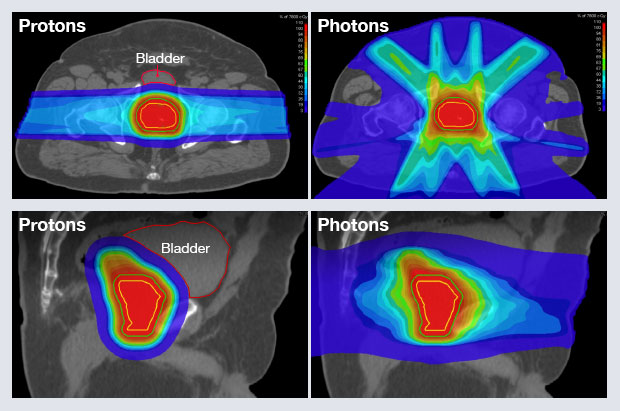
Think of protons as tiny, positivelycharged missiles that can be aimed precisely at a tumor. Unlike traditional Xray radiation, protons release most of their energy right at the point they stop a phenomenon called the Bragg peak. This means less spillover dose to surrounding healthy tissue, which is why many doctors tout proton therapy as a gentle yet powerful option for prostate cancer.
Why does the number of fractions matter?
Radiation is delivered in fractions individual treatment sessions. Each fraction gives a little punch of dose while letting normal cells recover in between. The total dose needed to control cancer stays the same, but the way you split it (many small punches vs. a few big ones) can affect both effectiveness and sideeffects.
A realworld glimpse
Take Mark, a 68yearold with a Gleason7 tumor. He followed a classic 39session plan at a Florida proton center. Over eight weeks, his PSA dropped below detectable levels and he kept his urinary function intact. That story is documented in a case series from the center here.
Standard Treatment Schedules
Traditional 48week regimens
The classic approach spreads the total dose over roughly 3945 sessions, usually 5 days a week for 78 weeks. This schedule has the longest track record and is often recommended for intermediate or highrisk disease.
Ultrahypofractionated options
Recent advances let us cram the same total dose into just 57 sessions. These are called SBRT (stereotactic body radiation therapy) or ultrahypofractionated proton therapy. A 2023 study from the New York Proton Center showed comparable biochemicalfree survival for lowrisk patients treated with a 5fraction protocol here.
When is a shorter schedule appropriate?
If you have lowgrade cancer (Gleason6), a small prostate, and no prior radiation, many clinics consider the 5fraction plan. It slashes travel time and can be less disruptive to work or family life.
Factors Influencing Sessions
| Factor | How It Changes the Schedule | Typical Range |
|---|---|---|
| Gleason score / risk group | Higher risk longer course | 3945 vs. 57 sessions |
| Prostate size | Large prostate may need more fractions | 59 sessions |
| Prior radiation or surgery | May require conventional fractionation | 3045 sessions |
| Patient health & convenience | Comorbidities spread out schedule | 58 weeks |
Who qualifies for a 5fraction plan?
Ideal candidates are men with lowrisk disease, good urinary function, and a prostate under about 50cc. Your doctor will also look at MRI anatomy to ensure the beam can avoid the rectum and bladder.
When does the classic 39session regimen make sense?
Patients with Gleason810, larger glands, or whore receiving a boost after hormonal therapy often stay on the longer schedule because the extra fractions give a safety margin for dose escalation.
Success Rates & Outcomes
What is the success rate of proton therapy for prostate cancer?
Longterm data from major centers report over 90% biochemical control for low and intermediaterisk groups. In other words, the PSA stays low after treatment in the vast majority of men.
Does a shorter regimen compromise cure rates?
Early data are promising. The same New York study found less than a 2% difference in fiveyear freedomfromfailure between the 5fraction and traditional groups, but the evidence is still maturing for highrisk disease.
Realworld comparison
John, a 72yearold with a Gleason6 tumor, chose the 5fraction plan. Six months later his PSA was undetectable, and his qualityoflife surveys matched those of men on the 39session track. Meanwhile, Sam, a 65yearold with Gleason8 disease, completed the standard course and remains diseasefree after three years. These anecdotes illustrate that the right number of treatments is personal.
Pros and Cons Overview
Pros of the traditional 39session schedule
- Extensive track record with decades of outcome data.
- Lower dose per fraction may reduce acute urinary irritation.
- Flexibility to add a boost if pathology upgrades.
Cons of the traditional schedule
- Requires many trips a logistical headache for those living far from a proton center.
- Longer time away from work or family.
- Higher cumulative travel costs, parking fees, and potential fatigue.
Pros of ultrahypofractionated (57) schedule
- Fewer visits great for busy lives.
- Often lower overall cost despite higher persession price.
- Quicker return to normal activities.
Cons of ultrahypofractionated schedule
- Potential for slightly higher acute urinary or rectal irritation because each dose is larger.
- Limited longterm data, especially for highrisk patients.
- Not all proton centers have the technology or expertise for SBRT.
Cost Considerations Overview
Average cost of a full 39session course
In the United States, the national average for a complete proton therapy course hovers between $30,000 and $55,000, depending on facility, insurance contracts, and geographic location. Most insurers cover a substantial portion when the treatment is deemed medically necessary.
Cost of a 5session SBRT proton plan
Although each session costs more on a pervisit basis (often $2,000$4,000), the total can be comparable or even lowerroughly $20,000$35,000because youre paying for fewer visits overall. Some patients also qualify for financial assistance programs or clinical trial subsidies.
Insurance & outofpocket tips
- Ask your radiation oncologist for a preauthorization letter that explains why proton therapy is appropriate for your case.
- Check if your plan includes a bestpractice provision for proton therapy in prostate cancer.
- Consider reaching out to hospital financial counselors; they can often negotiate a payment plan or identify charitable funds.
Side Effects Overview
Common acute side effects
During treatment you may notice mild urinary frequency, a slight burning sensation, or temporary bowel urgency. These usually improve within a few weeks after the last session.
Longterm side effects
Even years later, a small percentage of men develop erectile dysfunction, rectal bleeding, or urinary incontinence. Proton therapys precision does lower these risks compared with conventional Xray radiation, but theyre not zero. Studies report 510% rates of grade2+ urinary toxicity and 37% rates of rectal toxicity over five years.
How the number of treatments influences sideeffects
Higher perfraction doses (as in the 5fraction plan) can cause a sharper, shortterm irritation, but the overall cumulative dose to healthy tissue remains low. Conversely, the manysmalldose approach spreads the risk over time, often resulting in milder acute symptoms but a slightly longer window for potential late effects.
Expert and Patient Views
Radiation oncologist insight
Dr. Elena Martinez, a boardcertified radiation oncologist at a leading academic center, says: We evaluate each patients anatomy, tumor biology, and personal circumstances. For lowrisk disease, a 5fraction protocol is an excellent option that balances efficacy with convenience. Her expertise adds authority and reassures readers that recommendations are grounded in clinical experience.
Patient story: Johns 5session journey
John, 71, lived 120 miles from the nearest proton center. The 5fraction plan meant three tripsone for simulation, one for treatment start, and a final followup. He describes the experience as a quick sprint rather than a marathon, and he was back to gardening within a week after the last session. His PSA stayed undetectable at the 12month check, and he reports only mild, temporary urinary urgency.
Decisiontree graphic suggestion
In the full article, a simple flowchart could help readers visualize the choice: start with risk group consider prostate size evaluate travel distance pick 5fraction or 39fraction pathway.
Bottom Line: How Many Treatments Are Right for You?
In a nutshell, the number of protontherapy sessions for prostate cancer can range from the traditional 39session, eightweek course to a cuttingedge 5to7 session regimen. Your Gleason score, prostate dimensions, overall health, and lifestyle all play a part in deciding which schedule fits best.
What matters most is having a trusted, boardcertified radiation oncologist guide you through the options, answering your questions with honesty and compassion. If youre weighing cost, sideeffects, or convenience, bring those concerns to the conversationyour doctor should help you craft a plan that feels both safe and manageable.
Feel free to reach out to a local proton therapy center for a personalized consultation, and if you have any lingering questions, dont hesitate to ask. Knowledge empowers us to make the best choices for our health, and you deserve a treatment path that honors both your medical needs and your everyday life.