Not medical advice — written by Ngoc Vietsmall, who is not a healthcare professional.
This article summarises publicly available medical information for general readers. It cannot account for your history, medication or symptoms, and it is not a diagnosis or a treatment plan. Any dose mentioned comes from published labelling or guidelines — only your own prescriber can decide what is right for you.
Always speak to a doctor or pharmacist before starting, stopping or changing any treatment. If symptoms are severe or getting worse, seek urgent care. Full disclaimer · How this is written
Wondering if a test can tell you whether you have PCOS? The short answer is yes—your doctor will usually order a specific set of blood tests and an ultrasound to confirm the diagnosis. In the next few minutes we’ll unpack exactly which tests you’ll need, what the results mean, and how you can find reliable testing near you, all without drowning you in medical jargon.
Why Accurate Testing
Getting the right diagnosis early can feel like finding a light switch in a dark room. Suddenly, the fog lifts, and you can see the path to better health. Here’s why nailing the diagnosis matters:
- Early intervention helps manage fertility, weight, and mood swings before they spiral.
- Untreated PCOS often sneaks up as insulin resistance, high cholesterol, or even heart disease later in life.
- Peace of mind—knowing what’s going on stops the endless “maybe it’s just me?” loop.
Dr. Jessica Chan, an endocrinologist at Cedars‑Sinai, says, “A confirmed PCOS diagnosis is the first step toward a personalized treatment plan that can improve both metabolic health and quality of life.”According to Dr. Chan, the combination of symptoms, lab values, and imaging makes the picture clear.
Key PCOS Symptoms That Prompt Testing
Most of us notice at least one of these signs before thinking about testing:
- Irregular periods (missing more than two cycles a year)
- Excess facial or body hair (hirsutism)
- Persistent acne that won’t clear up
- Unexplained weight gain, especially around the abdomen
- Pelvic pain or ovarian cysts discovered by accident
Take Emma, a 27‑year‑old graphic designer. She brushed off her “extra” chin hair as genetics, but when her periods became erratic, she asked for a blood panel. Her results pointed straight to PCOS, and a simple ultrasound confirmed it. “I felt so relieved to finally have an answer,” she told me, “instead of blaming myself.”
Quick Symptom Checklist
Print this out and tick the boxes that apply to you before your appointment:
| Symptom | Frequency |
|---|---|
| Irregular periods | Often / Occasionally |
| Excess hair growth | Mild / Moderate / Severe |
| Acne that persists | Yes / No |
| Weight gain around waist | Yes / No |
| Pelvic discomfort | Yes / No |
Core Diagnostic Tests
When a doctor says “let’s run some tests,” they’re usually talking about a precise combo of blood work and imaging. Think of it as the two‑piece puzzle that, when put together, spells out PCOS.
Blood Tests – The Hormone Panel
These are the PCOS blood tests you’ll hear about most often. They look at hormone levels that govern ovulation and androgen production, plus a metabolic screen to catch any insulin‑related issues.
- LH (Luteinizing Hormone) & FSH (Follicle‑Stimulating Hormone) – an LH/FSH ratio above 2:1 suggests hormonal imbalance.
- Total & Free Testosterone – high levels confirm hyper‑androgenism, the “male‑type” hormones that cause hair growth and acne.
- DHEAS (Dehydroepiandrosterone Sulfate) – another androgen source, especially in the adrenal glands.
- Prolactin – elevated levels can mimic PCOS symptoms, so it’s a good rule‑out test.
- Anti‑Müllerian Hormone (AMH) – increasingly popular; higher AMH often correlates with a greater number of ovarian follicles.
- Fasting Glucose & HbA1c – screens for insulin resistance or pre‑diabetes.
- Lipid Profile – checks cholesterol and triglycerides, which can be out of whack in PCOS.
According to the NHS diagnostic guide, the hormone panel is the backbone of PCOS testing, while the metabolic panel helps plan long‑term health strategies.
Test‑by‑Test Breakdown
| Test | What it measures | Typical “PCOS‑positive” range | How it helps diagnosis |
|---|---|---|---|
| LH/FSH ratio | Ovarian signaling balance | LH > FSH (≈2 : 1) | Indicates androgen excess |
| Total Testosterone | Androgen level | > 70 ng/dL | Confirms hyper‑androgenism |
| AMH | Follicle count surrogate | > 4 ng/mL | Correlates with polycystic morphology |
| Fasting Glucose / HbA1c | Insulin resistance | ≥ 100 mg/dL (Glucose) or ≥ 5.7 % (HbA1c) | Flags metabolic risk |
Pelvic Ultrasound – Visual Confirmation
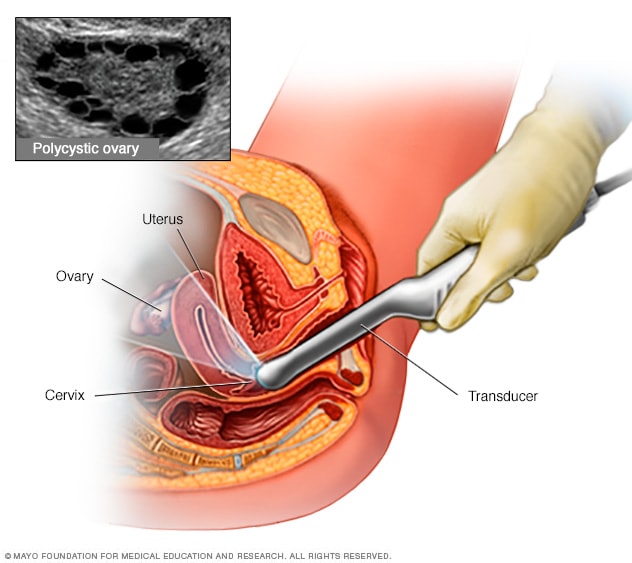
The imaging part of what tests are done to diagnose PCOS is usually a transvaginal ultrasound (TVUS). If TVUS isn’t possible—say, due to personal preference—a high‑resolution abdominal scan can still give useful clues.
Radiologists look for two key features:
- ≥ 12 small follicles (2‑9 mm) on one or both ovaries.
- An ovarian volume greater than 10 mL.
Mayo Clinic notes that the presence of multiple follicles doesn’t always mean PCOS, but when paired with hormonal evidence, it’s a strong piece of the puzzle.
Reading the Scan
Imagine each ovary as a tiny orchard. A healthy ovary has a few mature “fruits” (follicles) ready to release an egg each month. In PCOS, the orchard is over‑crowded with tiny, immature follicles that never ripen—hence the “polycystic” label.
Physical Exam & Medical History
Beyond labs and imaging, doctors assess:
- Blood pressure and BMI (higher values raise metabolic risk).
- Skin changes like acanthosis nigricans (darkened patches) that hint at insulin resistance.
- Ferriman‑Gallwey score for hirsutism (a quick visual tally).
- Family history of diabetes or PCOS, which can affect risk.
Doctor Visit Checklist
Print this and bring it to your appointment:
| Item | Details to Provide |
|---|---|
| Symptom diary | Period dates, hair growth, acne severity |
| Family history | Any relatives with PCOS, diabetes, or thyroid issues |
| Current medications | Birth control, steroids, supplements |
| Weight & BMI | Recent measurements |
Rotterdam Criteria Explained
PCOS isn’t defined by a single test—doctors use the Rotterdam criteria, a set of three components. You need any two of them to meet the diagnosis:
- Oligo‑/anovulation (irregular or absent periods).
- Clinical or biochemical hyper‑androgenism (excess hair, acne, or high testosterone).
- Polycystic ovaries on ultrasound.
Because the criteria require a combination, you’ll rarely see a single “PCOS blood test name” that answers everything. It’s the pattern, not the isolated number, that matters.
Normal vs. Abnormal Hormone Ranges
Here’s a quick reference you can keep on your phone:
| Hormone | Typical Normal Range | PCOS‑Indicative Range |
|---|---|---|
| LH | 5‑20 IU/L | > 20 IU/L (especially if FSH is low) |
| FSH | 5‑20 IU/L | Low‑normal when LH is high |
| Total Testosterone | 20‑70 ng/dL | > 70 ng/dL |
| AMH | 1‑4 ng/mL | > 4 ng/mL (often > 7 ng/mL in severe cases) |
Interpretation Scenarios
Case A: Laura’s LH is 25 IU/L, FSH 9 IU/L, and she reports missed periods for six months. The hormone imbalance alone points toward PCOS, even before imaging.
Case B: Maya’s hormone panel is perfectly normal, but her ultrasound shows 14 tiny follicles on each ovary. Because she also has irregular cycles, she still meets the Rotterdam criteria.
Finding Testing Near You
Searching “PCOS testing near me” can feel like scrolling through endless clinic listings. Here’s a shortcut:
- Start with your GP or primary care physician – they can order the blood panel and refer you for a pelvic ultrasound.
- Specialist clinics – endocrinology or reproductive endocrinology centers often have in‑house ultrasound suites.
- Private labs – companies like Labcorp and Quest offer a “PCOS panel” you can request without a doctor’s order (check local regulations).
- Insurance check – call your provider to confirm coverage for the hormone panel and ultrasound.
Practical Tips for Booking
- Ask the lab to run the full “PCOS hormone panel” – that phrase ensures they include LH, FSH, testosterone, DHEAS, prolactin, and AMH.
- Confirm whether the ultrasound will be transvaginal; it yields the most accurate follicle count.
- Bring your symptom checklist (the one above) to the appointment.
- If you’re worried about cost, ask about a bundled “PCOS testing package” that many private clinics advertise.
Next Steps After Diagnosis
Getting a diagnosis is only the first chapter. The rest of the story is how you manage symptoms and protect your future health.
Lifestyle First
Think of lifestyle changes as the foundation of a house. Without a solid base, any fancy décor (medications) won’t hold up. Proven strategies include:
- Balanced nutrition – a low‑glycemic diet (whole grains, legumes, plenty of veggies) helps tame insulin spikes.
- Regular movement – aim for 150 minutes of moderate cardio per week; strength training improves insulin sensitivity.
- Weight management – even a 5‑10% weight loss can normalize periods and lower androgen levels.
- Stress reduction – yoga, meditation, or a simple daily walk can calm cortisol, which otherwise worsens hormone imbalance.
Medical Options
When lifestyle tweaks need a boost, doctors may suggest:
- Combined oral contraceptives – regulate periods and lower androgen production.
- Metformin – improves insulin sensitivity; many women notice clearer skin and more regular cycles.
- Anti‑androgen meds (e.g., spironolactone) – target hirsutism and acne.
- Fertility treatments – if pregnancy is a goal, let’s talk ovulation induction or IVF with a reproductive specialist.
How to “Cure” PCOS Permanently?
Some search “how to cure PCOS permanently.” The honest answer: there’s no magic cure, but you can achieve *remission*—a state where symptoms are well‑controlled and the risk of complications is low. Think of it like managing a chronic condition (asthma or hypertension) where proper treatment means you can live a full, vibrant life.
Long‑Term Monitoring
PCOS is a lifetime companion, but regular check‑ups keep it in check:
- Blood work for glucose and cholesterol every 1‑2 years.
- Annual blood pressure and BMI measurements.
- Pelvic ultrasound every 3‑5 years if you’re not trying to conceive.
- Discussion with your doctor about any new symptoms (e.g., mood changes, severe acne).
Action Checklist
- Schedule your hormone panel and ultrasound.
- Keep a symptom diary for at least two menstrual cycles.
- Choose one lifestyle tweak (e.g., swap sugary drinks for water) and stick with it for 30 days.
- Join an online PCOS support group—sharing experiences can be a huge morale boost.
Remember, you’re not alone on this journey. Many women have walked this path, faced the same uncertainties, and emerged stronger. If you have questions, comment below or reach out to a trusted health professional—you deserve clear answers and compassionate care.
Conclusion
PCOS testing is the gateway to understanding your body, tailoring treatment, and protecting long‑term health. By combining symptom awareness, a targeted blood panel, and a pelvic ultrasound, you can achieve a solid diagnosis. From there, lifestyle changes, thoughtful medical options, and regular monitoring empower you to keep PCOS under control and live the life you want. Take the first step today—book that test, grab your checklist, and start turning uncertainty into confidence.