Not medical advice — written by Ngoc Vietsmall, who is not a healthcare professional.
This article summarises publicly available medical information for general readers. It cannot account for your history, medication or symptoms, and it is not a diagnosis or a treatment plan. Any dose mentioned comes from published labelling or guidelines — only your own prescriber can decide what is right for you.
Always speak to a doctor or pharmacist before starting, stopping or changing any treatment. If symptoms are severe or getting worse, seek urgent care. Full disclaimer · How this is written
Wondering what really happens when a doctor does a lung biopsy? In the next few minutes youll get a clear, stepbystep picture of the procedure, the different ways it can be done, and the most common risksno medical jargon, just the facts you need.
Whether youre an older adult, a concerned family member, or someone whos heard that a biopsy could spread cancer, well break down the truth, share realworld experiences, and give you practical tips for a smoother recovery.
What Is It?
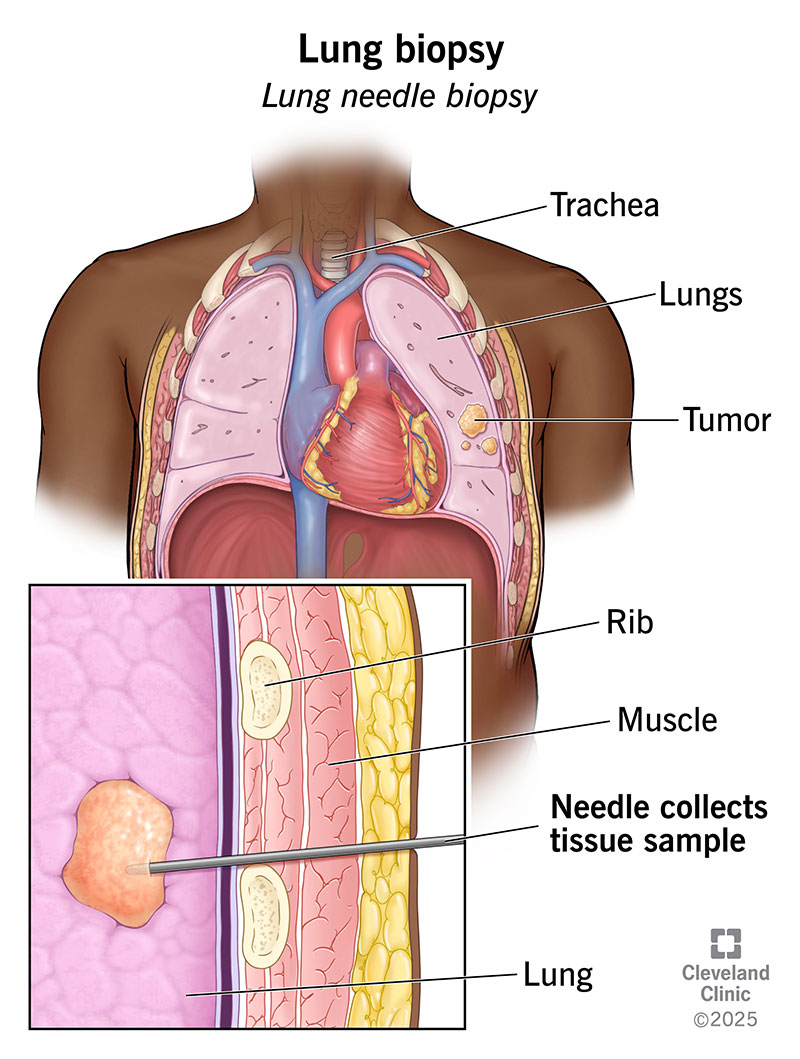
A lung biopsy procedure is simply a way for doctors to take a tiny piece of lung tissue so a pathologist can look at it under a microscope. The goal is to find out whether a spot on your scan is benign, cancerous, or something else entirely. Think of it as taking a photograph of a mystery thats hidden deep inside your chest, except the photo is an actual tissue sample.
Procedure Types
| Type | How Its Done | Typical Use | Pros | Cons |
|---|---|---|---|---|
| Percutaneous Needle | CTguided needle inserted through the skin | Peripheral nodules | Minimally invasive, quick | Higher pneumothorax risk |
| BronchoscopyGuided (EBUS) | Flexible scope passed down the airway, ultrasoundguided needle | Central lesions, lymph nodes | Direct visual control | Longer procedure time |
| Surgical (VATS) | Small incision, videoassisted thoracoscopy | When larger tissue needed | Largest sample, high diagnostic yield | Requires general anesthesia |
Each of these lung biopsy procedure types has its own sweet spot. A percutaneous needle biopsy is the most common because its quick and usually done under mild sedation. Some people prefer bronchoscopic approaches if the nodule lives near the airway, while surgeons step in for the toughest cases.
How to Prepare
Preparation isnt rocket science, but a few simple steps can make the whole experience smoother:
- Schedule a preprocedure CT or PET scan so the radiology team knows exactly where to aim.
- Tell your doctor about every medication youre takingespecially blood thinners, aspirin, or steroids. A short medication checklist can prevent surprises.
- Most centers ask you to fast for a few hours. Use that time to sip water and practice a calming breathing exercisenothing fancy, just a slow inhale, pause, slow exhale.
If youre anxious, consider a quick chat with the nurse or anesthesiologist. Knowing theyll give you a mild sedative (often just a pill or a tiny IV dose) can turn nerves into confidence.
The Day of the Procedure
When you arrive, youll meet a small but mighty team: a radiologist or pulmonologist, a nurse, and sometimes an anesthesiologist. Theyll verify your identity, confirm the consent form, and answer any lastminute questions.
Step 1 Anesthesia & Positioning
Most lung biopsy procedures use local anesthesiaa quick injection that numbs the skin and underlying tissue. A light sedative may accompany it, leaving you relaxed but fully awake. Youll be positioned based on the target locationlying on your back, side, or even sitting up.
Step 2 Needle Insertion & Sample Collection
Under realtime imaging (CT or ultrasound), the doctor advances a thin needle toward the nodule. The whole needleinlung moment typically lasts only a few seconds, but the imaging guidance may take 1020 minutes to ensure perfect placement.
Once the needle tip is inside the suspicious spot, the doctor withdraws a tiny core of tissueoften no bigger than a grain of rice. That little piece travels straight to the pathology lab, where experts look for cancer cells, infection, or inflammation.
Step 3 Immediate Monitoring
After the needle is out, youll stay on a recovery table for 3060 minutes while a chest Xray checks for a pneumothorax (air leaking into the space around the lung). If a small pocket of air appears, its usually observed and resolves on its own; larger leaks may need a brief catheter placement.
Risks & Complications
Every medical test carries some risk, and its only fair to lay them out frontandcenter. The most common complication of a lung biopsy is pneumothorax, occurring in roughly 1525% of needle biopsies. Most cases are minor, but a handful require a short chest tube.
Other possible issues include:
- Bleeding usually mild, but can be more significant if youre on blood thinners.
- Infection rare, because the needle passes through sterile skin.
- Tumor seeding the fear that a biopsy might spread cancer. According to Johns Hopkins Medicine, the chance of cancer spread from a lung biopsy is less than 0.01% and is not considered a major concern in everyday practice.
When it comes to older adults, the lung biopsy risks elderly deserve a special mention. Agerelated changes in lung elasticity and a higher likelihood of anticoagulant use can bump the pneumothorax rate up to about 30%. That doesnt mean the procedure is offlimits; it just means the care team will watch a bit longer and may opt for a different biopsy type if the risk feels too high.
Recovery & AfterCare
Most people walk out of the hospital the same day. Your official lung biopsy recovery time depends on the type of procedure and how your body reacts:
- Percutaneous needle 12 days of light activity, avoiding heavy lifting or vigorous exercise for about a week.
- Bronchoscopyguided similar timeline, but you might feel a slight sore throat from the scope.
- Surgical (VATS) 57 days of limited activity, with a short hospital stay (usually 12 nights).
Heres a quick checklist to keep on your nightstand:
- Watch for shortness of breath, sharp chest pain, or a new cough call your doctor right away.
- Take any prescribed pain medication as directed; overthecounter ibuprofen works for many.
- Stay hydrated and practice deepbreathing exercises to keep the lungs expanded.
- Schedule a followup appointment in 12 weeks to discuss the pathology results.
Most people feel back to normal within a few days, but if you have a physically demanding job (like construction or nursing), give yourself 12 weeks before returning to full duties.
Answering Common Concerns
Its natural to have questions swirling in your mind. Here are a few that pop up a lot, woven directly into the story:
Can a lung biopsy cause cancer to spread?
Research shows the answer is a resounding no for the vast majority. The tiny needle path is so small that cancer cells rarely hitch a ride. The rare cases of seeding happen mainly with certain tumor types and are far outweighed by the diagnostic benefits.
Is a lung biopsy a serious procedure?
Overall, its minimally invasive with a mortality rate of less than 0.2%. Seriousness is more about the individuals health backgroundheart disease, lung function, or bloodthinner use can tip the balance. Your care team will assess these factors before giving the green light.
What is the most common complication?
Again, pneumothorax takes the crown. The good news? Most lung leaks are tiny and heal on their own. If a chest tube is needed, its usually removed within a day.
How long does the whole thing take?
Needle biopsies typically run 1545minutes, while a surgical VATS biopsy may stretch to 6090minutes. Add a preprocedure checkin and postprocedure monitoring, and youre looking at a halfday overall commitment.
Are elderly patients at higher risk?
Yes, age can increase the chance of pneumothorax and bleeding, but seasoned centers adjust technique and observation time accordingly. Many seniors undergo lung biopsies safely every year.
RealWorld Stories & Expert Insights
Let me share a quick story that illustrates the whole journey. Mary, a 71yearold retired teacher, noticed a small nodule on her annual CT scan. Her pulmonologist recommended a percutaneous needle biopsy. Mary was nervousshed heard lung biopsy can cause cancer to spread. After a gentle chat with the doctor, she learned the risk was minuscule. She fasted, took her mild sedative, and the procedure was over in 20minutes. She stayed for a short observation, had a tiny pneumothorax that resolved on its own, and went home with a bottle of water and a gentle reminder to avoid heavy lifting for a week. Two weeks later, the pathology report showed the nodule was benign. Marys story underscores that the procedure is often quick, manageable, and, most importantly, incredibly informative.
Dr. Laura Chen, an interventional radiologist at a major academic center, adds that the key to a safe lung biopsy is meticulous planningreviewing imaging, tailoring the approach to the patients anatomy, and having a clear protocol for managing complications. She also stresses the importance of patient education: When patients know what to expect, anxiety drops, and cooperation improves, which actually lowers complication rates.
When to Talk to Your Doctor
If youve been told you need a lung biopsy, ask yourself these three questions:
- Do I understand why the tissue sample is needed? (Is it to confirm cancer, rule out infection, or assess inflammation?)
- Have we discussed the best biopsy type for my specific nodule and health status?
- Do I have a clear plan for postprocedure monitoring and followup?
Any lingering redflag symptomsnew chest pain, worsening shortness of breath, fevershould prompt an immediate call to your care team. And remember, its okay to ask for a second opinion if you feel unsure.
Conclusion
A lung biopsy procedure is a safe, highly informative test that comes in several flavors, each designed to balance diagnostic yield with personal health factors. By understanding the steps, knowing the real risks (like pneumothorax), and preparing for a smooth recovery, you empower yourself to make confident decisions alongside your doctors. If youre facing a biopsy, dont hesitate to ask your care team about the specific type they recommend, review the recovery checklist, and keep an open line of communication. Sharing this knowledge with friends or family can also turn a scary medical moment into a shared journey of empowerment.