



Not medical advice — written by Ngoc Vietsmall, who is not a healthcare professional.
This article summarises publicly available medical information for general readers. It cannot account for your history, medication or symptoms, and it is not a diagnosis or a treatment plan. Any dose mentioned comes from published labelling or guidelines — only your own prescriber can decide what is right for you.
Always speak to a doctor or pharmacist before starting, stopping or changing any treatment. If symptoms are severe or getting worse, seek urgent care. Full disclaimer · How this is written
Important: This article is for informational purposes only and does not constitute medical advice. This site is run by an individual who is not a healthcare professional. Always consult your own physician or cardiologist for any decisions regarding your treatment, including dosing. Only your prescriber can determine the appropriate dose for you.
If you are facing a fresh diagnosis of a heart condition or are about to head into a cardiac procedure, you may receive a single, powerful tablet – a 180mg Brilinta loading dose. According to the prescribing information, that one-time pill is designed to jumpstart your blood's ability to stay clear of clots, providing protection within minutes. The actual decision to use this dose rests solely with your prescriber.
Understanding what the prescribing information says about why, when, and how that loading dose is taken – and what follows – can help you have informed conversations with your healthcare team. Let's cut the jargon, skip the fluff, and walk through everything you need to understand, as if we were chatting over coffee.
Why a Loading Dose
What does loading dose really mean?
A loading dose is a larger, one-off amount of medication given to quickly get the drug's level in your bloodstream to the target range described in the product labeling. For Brilinta (ticagrelor), according to the prescribing information, the goal is to achieve a high level of platelet inhibition – often cited as over 90% in study settings – within a couple of hours. Think of it like turning the key in a car starter – you need a burst of power to get the engine running before you settle into a steady cruise.
How does it improve outcomes?
The PLATO trial indicated that study participants who received the 180mg loading dose shortly after diagnosis had fewer heart attacks and strokes in the first weeks following an acute coronary syndrome (ACS). The rapid inhibition of platelets is intended to help block sticky clots that can form on a damaged artery wall, particularly after procedures like percutaneous coronary intervention (PCI).
When is it not recommended?
The prescribing information lists several contraindications. For example, if a person is actively bleeding, has a severe liver problem, or is taking strong anticoagulants that cannot be paused, a doctor may decide to hold off on the loading dose. Always flag any unusual bleeding or bruising to your healthcare team.
Standard Regimen
Exact dosing instructions
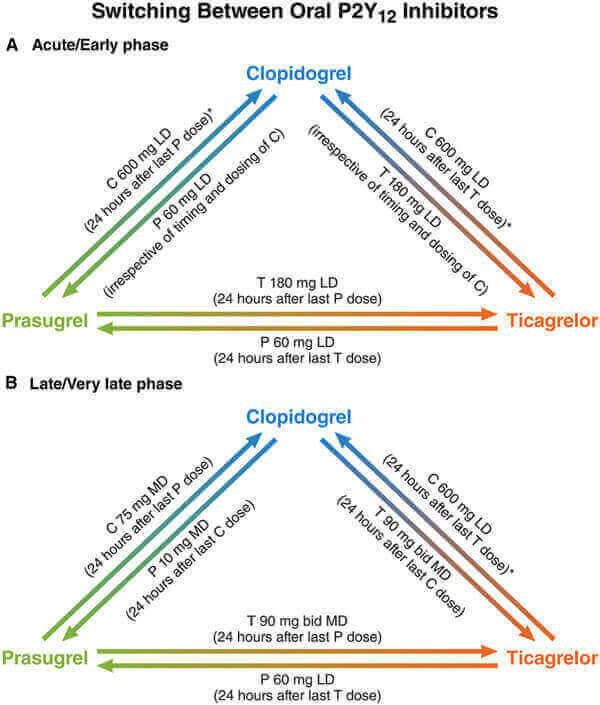
The prescribing information for Brilinta states that the loading dose consists of two 90 mg tablets (total 180 mg) taken together as a single oral dose, typically on the day an ACS is diagnosed. For the maintenance phase, the label indicates that a dose of 90 mg is taken in the morning and again in the evening for the first 30 days if a stent has been placed. However, only your prescriber can determine the exact dosing schedule that applies to your situation.
How long does the effect last?
After that single loading dose, platelet inhibition remains at a high level for roughly 24 hours, providing a protective window while the body adjusts to the regular dosing schedule, as noted in the product labeling.
Realworld example
Consider a hypothetical example: a 58-year-old who arrives at the ER with a STEMI (heart attack). In this scenario, the cardiology team administers the 180 mg Brilinta loading dose along with aspirin 300 mg, and then proceeds to the cath lab for a stent placement. Because the loading dose acts quickly, the platelets are inhibited, and the procedure is completed without clot formation. This illustrates the intended effect, but every case is unique, and your own clinician will tailor the approach to you.
Scenario Variations
| Clinical Scenario | Loading Dose | First Maintenance Dose | Key Timing Note |
|---|---|---|---|
| STEMI | The label states a 180 mg single dose | The first maintenance dose is scheduled 6 to 12 hours later | Often given before PCI |
| NSTEMI | The label recommends a 180 mg single dose | The first maintenance dose is scheduled 6 to 12 hours later | May be combined with aspirin 300 mg as per standard protocols |
| PCI / Stent placement | The label recommends a 180 mg single loading dose | For maintenance, the label suggests 90 mg twice daily for 30 days, then 60 mg twice daily for up to one year | Matches antiplatelet protocol for drug-eluting stents |
| CABG planned | The label indicates a 180 mg dose, or it may be omitted if surgery is <24h away | The label advises holding the dose 5 days before surgery | ACC surgical guidelines are referenced for further direction |
ticagrelor loading dose in STEMI
In STEMI, the 180 mg Brilinta loading dose is described as providing the fastest platelet inhibition, which is why it is widely used in emergency settings. According to the FDA prescribing information, the loading dose should be given as soon as possible after diagnosis.
ticagrelor loading dose in NSTEMI
For NSTEMI, the same 180 mg loading dose is recommended in the prescribing information, though timing may be more flexible, especially if the patient is already on another antiplatelet. Your cardiologist will determine the exact moment based on your overall risk profile.
brilinta dose for stents
After a stent is placed, the maintenance dose is crucial. According to the label, for the first month the recommended dose is 90 mg twice daily to help keep the stent surface free of clots while the artery heals.
Maintenance Dosing
Standard 90mg twicedaily schedule
According to the prescribing information, most patients remain on 90 mg twice a day for up to 12 months after an ACS event. This schedule is linked to a reduced risk of stent thrombosis as documented in multiple studies.
Switching to 60mg BID after 12months
For individuals over 75, those with a history of major bleeding, or when the clinician determines that clotting risk has lowered, the dose may be tapered to 60 mg twice daily. The PEGASUS-TIMI 54 trial showed that the lower dose still offers solid protection while reducing bleeding events.
brilinta 60mg vs 90mg
In plain language: the 90 mg dose is described as the full-throttle option for the first year, especially after a fresh stent. The 60 mg dose is the cruise-control mode that some may shift into once the heart has settled and bleeding concerns become more prominent.
Benefits & Risks
Main benefits of the loading dose
- Rapid clot prevention – the prescribing information notes that platelet inhibition occurs within minutes.
- Better outcomes after PCI – studies suggest fewer stent-related complications.
- Consistent with guideline-based care – the ACC/AHA guideline recommends it for all ACS patients.
Potential risks & sideeffects
Nothing is without a downside. Common side effects reported include:
- Bleeding (minor bruising to serious gastrointestinal bleeding).
- Dyspnea – a shortness of breath that some patients describe as a feeling of not getting enough air.
- Bradyarrhythmia – a slower heart rate in rare cases.
Managing the riskbenefit ratio
Discuss your personal bleeding risk with your cardiologist. If you have a history of ulcers, are on blood thinners, or have low body weight, your doctor may adjust the dose or add protective strategies like proton-pump inhibitors. Regular blood work and check-ins help catch any issues early.
FAQ Moments
Can I split the loading dose into two pills?
The loading dose is composed of two 90 mg tablets. The prescribing information instructs that they should be taken together at the same time to achieve the full effect quickly. Never alter the way you take the dose without speaking to your prescriber.
Do I need to take aspirin with the loading dose?
The standard emergency protocol described in guidelines often pairs a 300 mg aspirin dose with the Brilinta loading dose to provide a dual antiplatelet effect. Your doctor will confirm the exact timing and necessity for you.
What if I vomit after taking the loading dose?
According to the prescribing information, if vomiting occurs within 30 minutes of taking the dose, repeating the dose may be considered. After that window, contact your healthcare provider for guidance – they may advise a different approach. Do not repeat the dose on your own without medical advice.
Is the loading dose the same for stents vs medical therapy?
The 180 mg loading dose is the same, but the maintenance regimen differs. After a stent, the label recommends the higher 90 mg twice-daily schedule for a month, whereas medical-only therapy may transition to once-daily dosing sooner, as determined by your clinician.
Practical Tips
Checklist before taking the dose
- The prescribing information includes considerations such as confirming no allergy to ticagrelor.
- Avoiding a heavy meal that could delay absorption (a light snack is fine) is mentioned.
- Checking for interactions with strong CYP3A4 inhibitors is advised.
- Having water available is recommended.
How to store Brilinta tablets
Keep them at room temperature, away from moisture and direct sunlight. A medicine cabinet or a drawer works fine – no need for a fridge.
Setting reminders
Use your phone's alarm, a pillbox with compartments, or a medication-tracking app. Since the first dose is critical, a double reminder (phone + written note) can help reduce stress.
Building Authority & Trust
Expert insight
Dr. Laura Martinez, interventional cardiologist at a major university hospital, says, "The 180mg Brilinta loading dose is evidence-based and saves lives. It's essential we educate patients on why that single tablet matters so much."
Credible sources you can trust
- FDA prescribing information – the ultimate legal source for dosage.
- ACC/AHA 2023 guideline update – the gold standard for heartcare practice.
- Peerreviewed studies like PLATO and PEGASUS-TIMI 54 for efficacy data.
Transparency
All the numbers, guidelines, and study results referenced in this article can be verified through the official documents. If anything feels unclear, ask your doctor to walk you through the sources – a good clinician will welcome the conversation.
Conclusion
The 180mg Brilinta loading dose is described as a cornerstone of early antiplatelet therapy for those facing a heart attack, NSTEMI, or upcoming PCI. Evidence suggests it acts fast and may lower the risk of dangerous clots, setting the stage for recovery. By understanding the prescribing information, recognizing the potential benefits and risks, and keeping open communication with your healthcare team, you can be better prepared. Always remember that your own prescriber is the only one who can determine the right dose and schedule for you. If you have questions about your treatment, reach out to your cardiology clinic. Knowledge is power, and informed conversations with your clinician are key.








