Not medical advice — written by Ngoc Vietsmall, who is not a healthcare professional.
This article summarises publicly available medical information for general readers. It cannot account for your history, medication or symptoms, and it is not a diagnosis or a treatment plan. Any dose mentioned comes from published labelling or guidelines — only your own prescriber can decide what is right for you.
Always speak to a doctor or pharmacist before starting, stopping or changing any treatment. If symptoms are severe or getting worse, seek urgent care. Full disclaimer · How this is written
Hey there, fellow healthcare professional. If youve ever stared at a patient with a stiff neck and wondered whether youre dealing with a harmless viral case or something that needs a rocksolid plan, youre in the right spot. Below youll find the most practical, straighttothepoint rundown of the IDSA viral meningitis guidelinesthe latest 2023 and 2024 PDFs, how to diagnose, when (and when not) to treat, and a few handy comparisons with European recommendations. Lets dive in together, like were chatting over a cup of coffee while we sort through the details.
Full Guideline Overview
What do the IDSA viral meningitis guidelines cover?
The IDSA (Infectious Diseases Society of America) released a concise, evidencebased framework that walks you through every step of managing aseptic meningitisfrom the first redflag symptom to the final followup visit. The document is part of a broader family of IDSA guidelines on infectious diseases, but the viral meningitis chapter zeroes in on three core areas: diagnostic workup, supportive care, and specific antiviral therapy only when truly indicated.
Who authored these recommendations?
A panel of 12 seasoned infectious disease physicians, pediatric neurologists, and epidemiologists pooled data from dozens of systematic reviews and randomized trials. Their goal? To blend the latest science with realworld practicality, so you wont be stuck flipping through endless pages of jargon when you need a quick decision.
Key objectives of the guidelines
- Promptly identify viral meningitis and rule out bacterial infection.
- Standardize the use of CSF PCR panels and other diagnostics.
- Outline when antivirals such as acyclovir are warranted.
- Provide clear criteria for hospitalization versus outpatient care.
- Offer agespecific recommendations for children (idsa meningitis guidelines pediatrics).
Latest PDF Downloads
Where can I grab the 2023 and 2024 PDFs?
The most recent versions are hosted on the official IDSA guideline page. Youll find a quick Download PDF button for both the 2023 and the brandnew 2024 updatesno registration required.
What changed between the 2021 and 2024 editions?
Heres a quick snapshot of the most noticeable updates:
| Year | PDF Link | Major Change |
|---|---|---|
| 2021 | 2021 PDF | Baseline recommendations; limited PCR guidance. |
| 2023 | 2023 PDF | Introduced routine multiplex PCR, clarified antiviral thresholds. |
| 2024 | 2024 PDF | Added pediatric dosing tables, expanded European guideline comparison, refined discharge criteria. |
How do I keep the PDFs handy for fast reference?
Save them to a cloud folder that you can pull up on any devicemost clinicians love adding the link to their EMR quick links pane. That way, if a patient arrives at 2a.m. with a fever and headache, you have the exact wording of the guideline a tap away.
Stepwise Diagnostic Algorithm
When should I suspect viral meningitis?
Its a classic balancing act. Look for a sudden onset of headache, photophobia, and neck stiffness, but also check for fever patterns and immunocompetence. Viral cases often have a milder fever (<38.5C) and a CSF whitecell count thats predominantly lymphocytic, whereas bacterial meningitis brings higher neutrophils and a markedly low glucose.
What lab tests does the IDSA recommend?
- CSF Analysis: Cell count, protein, glucose, andmost importantlyPCR for common viruses (enterovirus, HSV1/2, VZV).
- Serum Studies: Basic metabolic panel to catch dehydration and a quick blood culture if bacterial infection cannot be excluded.
- Imaging: Head CT only if neurological deficits, papilledema, or immunocompromise raise suspicion of increased intracranial pressure.
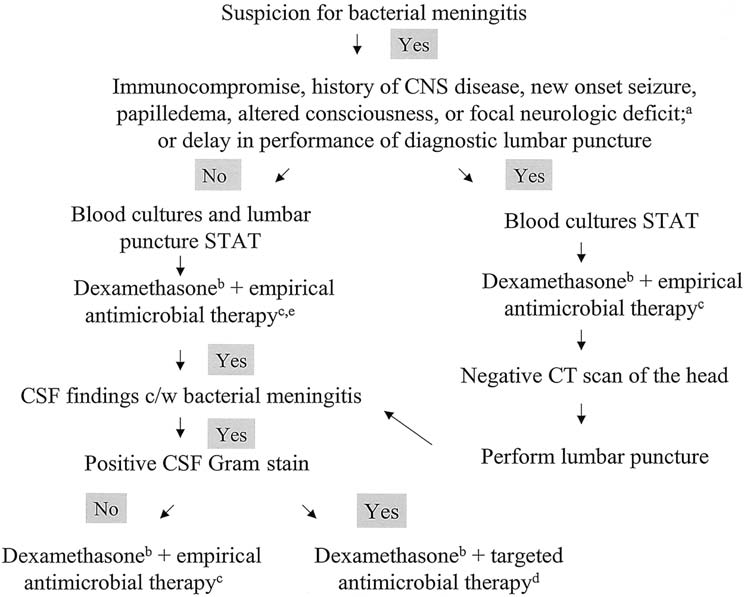
Flowchart for rapid decisionmaking
Picture a simple threestep flow:
- Initial assessment: Fever, neck stiffness, mental status.
- CSF tap: If safe, send for PCR; if not, treat empirically for bacterial meningitis while arranging imaging.
- Interpret results: Positive viral PCR supportive care or antiviral if indicated; negative PCR + high neutrophils continue antibiotics.
Current Treatment Recommendations
Is antiviral therapy ever needed?
Yes, but only for specific culprits. The guideline advises acyclovir for confirmed HSV1/2 or VZV meningitis, and ganciclovir in rare CMV cases. For the overwhelming majority of enteroviral infections, antivirals are not recommendedsupportive care reigns supreme.
What does supportive care actually look like?
- Hydration: Aim for isotonic fluids to maintain euvolemia.
- Analgesia: Acetaminophen or ibuprofen for headache and fever.
- Monitoring: Check for seizures or worsening mental status; if present, consider ICU admission.
- Rest: Encourage quiet environments; light exposure can aggravate photophobia.
When should I admit a patient?
The IDSA draws a clear line: infants under 1year, immunocompromised hosts, patients with severe headache that impairs daily function, or anyone with altered mental status should be observed inhospital. Otherwise, mild cases can be safely discharged with clear followup instructions.
Dosage cheatsheet for the few antivirals youll ever use
| Drug | Indication | Dosage (IV) | Duration |
|---|---|---|---|
| Acyclovir | HSV1/2 meningitis | 10mg/kg q8h | 1421days |
| Ganciclovir | CMV meningitis | 5mg/kg q12h | 21days |
Pediatric Focus Guide
How do the guidelines shift for kids?
Children arent just small adults. The idsa meningitis guidelines pediatrics section adjusts normal CSF values, suggests lower thresholds for hospital admission, and supplies weightbased dosing tables for antivirals.
Case vignette: A fiveyearold with aseptic meningitis
Emma, a lively 5yearold, arrived with fever (38.7C), headache, and a limp. Her CSF showed 120cells/L (90% lymphocytes), normal glucose, and a positive enterovirus PCR. Following the IDSA guidance, she received IV fluids, acetaminophen, and was observed for 24hours. She was discharged with a stay hydrated, rest, and call if fever spikes note. No antiviralsjust good old supportive care.
Pediatric dosing table (excerpt)
| Drug | Weight Range | Dosage (IV) |
|---|---|---|
| Acyclovir | 1020kg | 10mg/kg q8h |
| Acyclovir | >20kg | 15mg/kg q8h |
European Guideline Comparison
What does the European meningitis guideline say?
According to a study published in Clinical Infectious Diseases, the ESCMID (European Society of Clinical Microbiology and Infectious Diseases) recommends broader initial viral PCR panels and adds a watchandwait approach for neonates when the CSF profile is ambiguous. You can read more on the official ESCMID guideline site.
Key similarities and differences
- Similarities: Both endorse early lumbar puncture, stress supportive care, and limit antiviral use to HSV/VZV.
- Differences: ESCMID suggests routine use of multiplex PCR even in lowrisk adults, while IDSA reserves it for cases where viral etiology is strongly suspected. ESCMID also recommends a slightly longer observation period for children under 2years.
Sidebyside comparison
| Aspect | IDSA (2024) | ESCMID (2023) |
|---|---|---|
| PCR Scope | Targeted (enterovirus, HSV, VZV) | Multiplex (10 viruses) |
| Hospital Admission | Infants<1yr, severe symptoms | Infants<2yr, any fever>38C |
| Antiviral Use | HSV/VZV only | Same, plus CMV in immunocompromised |
Benefits and Risks Overview
What are the clinical benefits?
Following the IDSA viral meningitis guidelines cuts down on unnecessary antibioticssaving patients from side effects and hospitals from extra costs. It also standardizes discharge criteria, meaning you can safely send patients home sooner, freeing up beds for higheracuity cases.
Potential pitfalls or risks?
Overreliance on PCR can be a doubleedged sword. False positives occasionally happen, especially with lowviralload samples. Thats why the guideline stresses clinical correlation, not blind testfollowing. Also, the cost of multiplex panels can strain budgets in smaller clinics.
Balancedrisk checklist
- Confirm clinical suspicion before ordering PCR.
- Reevaluate CSF results in the context of symptom timeline.
- Consider local viral prevalence (e.g., enterovirus season).
- Discuss test costs with patients when appropriate.
Implementing the Guidelines
How can I embed the algorithm into my EMR?
Most EMR systems allow custom order sets. Create a Viral Meningitis Workup bundle that includes a lumbar puncture order, PCR panel, and a discharge instruction template. Tag it with a reminder: Check IDSA 2024 recommendations before finalizing.
Patientfriendly handouts
Take the key pointswhat symptoms to watch, why antibiotics might not be needed, and homecare tipsand turn them into a onepage flyer. Use simple language (drink plenty of fluids, rest in a quiet room) and add a phone number for rapid questions.
Implementation timeline (quick roadmap)
- Week1: Download the latest PDFs and store them in a shared drive.
- Week2: Build EMR order set and pilot it with one clinic.
- Week3: Train nurses and residents on the new handout.
- Week4: Review the first 20 cases, gather feedback, and adjust.
Helpful Resources & Reading
Beyond the PDFs, these resources can deepen your understanding:
- Official IDSA guideline page: The hub for the most recent updates and supplementary tables.
- ESCIDM European guideline: Great for crosschecking regional variations.
- Recent systematic review (2024): Provides a metaanalysis of antiviral efficacy in viral meningitis.
Feel free to bookmark these links, print the quickreference sheets, and keep them on your desk. The more accessible the info, the faster youll feel confident making the right call for each patient.
Conclusion
There you have ita friendly, yet thorough walkthrough of the IDSA viral meningitis guidelines. By grabbing the latest PDFs, applying the stepwise diagnostic flow, and tailoring treatment to the individualwhether adult or childyoull deliver care thats both evidencebased and compassionate. Remember, the guidelines are a map, not a fence; balance the science with your clinical intuition, and youll navigate each case with confidence. If anything in this guide sparked a question or youve got a story from the bedside, lets keep the conversation goingafter all, sharing knowledge is what makes us all better at what we love to do.