Not medical advice — written by Ngoc Vietsmall, who is not a healthcare professional.
This article summarises publicly available medical information for general readers. It cannot account for your history, medication or symptoms, and it is not a diagnosis or a treatment plan. Any dose mentioned comes from published labelling or guidelines — only your own prescriber can decide what is right for you.
Always speak to a doctor or pharmacist before starting, stopping or changing any treatment. If symptoms are severe or getting worse, seek urgent care. Full disclaimer · How this is written
At first I thought it was just a regular headache then the dizziness didnt go away, and the doctor mentioned something about leukemia in the brain. If youre reading this, youre probably looking for a clear answer, fast. So heres the short version: leukemia can leak into the fluid that cushions your brain and spinal cord, causing a range of neurologic symptomsfrom pounding headaches to seizures. Early detection through a spinal tap or MRI, followed by targeted cns leukemia treatment, can dramatically improve the leukemia in brain survival rate. Below is everything you need to know, broken down into bitesize sections that feel more like a conversation with a friend than a textbook.
Why CNS Gets Hit
What Is CNS Leukemia?
CNS stands for central nervous system, which includes the brain, spinal cord, and the fluid (cerebrospinal fluid, or CSF) that bathes them. When leukemic cells infiltrate that space we call it central nervous system leukemia. Doctors classify the disease into three levelsCNS1, CNS2, and CNS3based on how many cancer cells show up in the CSF. These numbers arent just jargon; they guide treatment intensity and give a hint about prognosis.
How Common Is CNS Involvement?
Roughly 510% of adults with acute lymphoblastic leukemia (ALL) and about 4% of those with acute myeloid leukemia (AML) develop CNS disease. The risk is higher in children, but adult numbers have been creeping up as we get better at spotting subtle signs.
| Leukemia Type | CNSInvolvement (%) |
|---|---|
| ALL (Adults) | 710 |
| AML (Adults) | 35 |
| ALL (Children) | 1215 |
| AML (Children) | 46 |
Why Does It Matter?
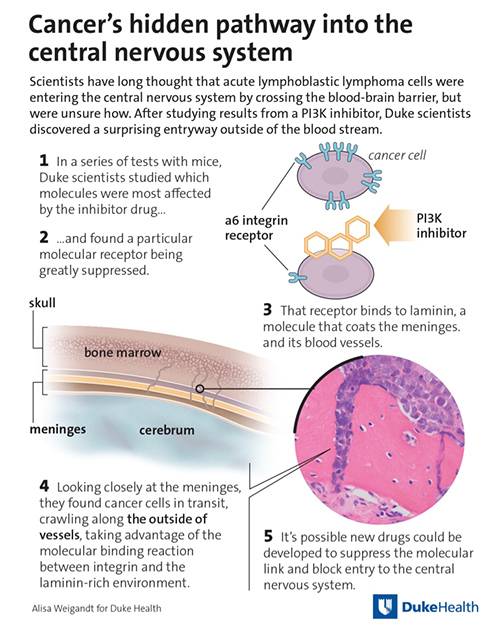
When leukemic cells settle in the CNS theyre shielded from many standard chemotherapies because of the bloodbrain barrier. Thats why we need special cns leukemia treatment strategiesthink intrathecal chemo (injected directly into the CSF) and sometimes lowdose radiation.
How Cells Travel
Leptomeningeal Spread
The most frequent route is via the leptomeningesthe thin membranes covering the brain and spinal cord. Cells drift with the CSF, hitching a ride to every nook and cranny.
Breaking the BloodBrain Barrier
In aggressive disease, leukemic blasts can actually breach the bloodbrain barrier, slipping into brain tissue itself. This tends to cause more focal neurologic deficits, like weakness on one side of the body.
Perineural Infiltration
Less common but still important: cancer cells can crawl along nerve roots, producing radicular pain that feels like a bad sciatica episode. If youre experiencing unexplained nerve pain, its worth mentioning to your oncologist.
Quick Flowchart
Leptomeningeal spread CSF circulation CNS1/2/3 classification.
Vascular breach brain parenchyma focal deficits.
Perineural route nerve roots radicular pain.
Symptoms to Watch
Headache & Neck Stiffness
Persistent headaches that dont improve with usual meds, especially when paired with a stiff neck, can signal increased pressure from leukemic cells in the CSF.
Cognitive Changes
Brain fog, memory lapses, or trouble concentrating are often dismissed as stress, but in the context of leukemia they deserve a closer look.
Seizures & Focal Deficits
Partial seizures, double vision, or weakness in an arm or leg suggest the disease has reached the brain tissue itself. These are redflag central nervous system leukemia symptoms.
Vision & Hearing Issues
Double vision (diplopia) or sudden hearing loss can occur when leukemic cells press on cranial nerves. Its unsettling, but catching it early can prevent permanent loss.
Motor Weakness & Radiculopathy
Feeling clumsy or noticing a new weakness in the hands or feet might be the nerves feeling the invasion. A lumbar puncture can confirm whether its CNS disease.
All CNS Involvement Symptoms Checklist
- New or worsening headache
- Neck stiffness
- Confusion or memory trouble
- Seizures or sudden weakness
- Double vision or hearing changes
- Pain radiating along a nerve root
One of my friends, Alex, described the moment she realized something was off: I thought it was just stress from work, but then I started missing words in conversations. My doctor ordered a spinal tap, and thats when we found the leukemia had spread to my brain. Realworld stories like Alexs remind us that symptoms can be subtleand that listening to your body really matters.
How We Diagnose
Lumbar Puncture & CSF Cytology
The gold standard is a lumbar puncture (spinal tap). Fluid is examined under a microscope for leukemic blasts. A positive result automatically bumps you into a CNS2 or CNS3 category, depending on cell count.
Imaging CNS leukemia radiology
MRI with gadolinium contrast is the most sensitive imaging tool. It can reveal leptomeningeal enhancementessentially a bright outline of the brains membranesindicating disease.
According to a recent study, MRI picks up about 80% of CNS involvement, while CSF cytology alone catches roughly 60% (study).
Flow Cytometry & Molecular Testing
These advanced labs can detect tiny amounts of disease that microscopy might miss, giving a more precise picture of minimal residual disease (MRD) after treatment.
| Method | Sensitivity |
|---|---|
| CSF Cytology | ~60% |
| MRI with Contrast | ~80% |
| Flow Cytometry | ~95% |
Treatment Options Overview
Intrathecal Chemotherapy
This is the cornerstone. Drugs like methotrexate, cytarabine, and sometimes steroids are injected directly into the CSF, bypassing the bloodbrain barrier. The schedule varies, but most protocols start with weekly doses, then taper.
Systemic HighDose Chemotherapy
Some drugshighdose methotrexate or cytarabinecan cross the barrier at therapeutic levels, providing a doublehit strategy.
Radiation Therapy
Lowdose craniospinal irradiation is reserved for refractory cases or when rapid control is needed. Its effective but can bring longterm neurocognitive side effects, so doctors weigh the benefits carefully.
Targeted & Immunotherapies
Newer agents like blinatumomab (a bispecific Tcell engager) and CART cell therapy have shown promise even when the disease lives in the CNS. Trials are ongoing, but early data suggest they can achieve remission without the heavy radiation burden.
StemCell Transplantation
For highrisk patients, an allogeneic transplant after achieving CNS remission can offer a chance at cure. The graftversusleukemia effect helps eradicate hidden cells.
DecisionTree Flowchart
Initial Diagnosis Intrathecal Chemo Assess Response If Persistent Add HighDose Systemic Chemo Consider Radiation Evaluate Targeted Options Consolidate with StemCell Transplant (if eligible).
Survival Outlook Details
Overall Survival: CNSPositive vs. CNSNegative
Patients without CNS involvement generally enjoy a 5year survival of roughly 70% (ALL) and 35% (AML). When CNS disease is present, those numbers dip to around 55% for ALL and 20% for AML, but the gap narrows dramatically when early, aggressive cns leukemia treatment is applied.
Factors That Improve Prognosis
- Early detection (CNS1 status)
- Prompt intrathecal therapy
- Younger age and good performance status
- Use of modern targeted agents
Pediatric vs. Adult Outcomes
Children often have better outcomes (up to 80% 5year survival) because their nervous systems tolerate therapy better and protocols are more standardized. Adults benefit from newer adultfocused trials that are closing the gap.
Survival Curve (Illustrative)
Imagine a graph where the blue line (CNS1) stays high, while CNS3 drops steeply but climbs back after intensive therapya visual reminder that once diagnosed, theres still hope.
Living With CNS
Managing Neurologic SideEffects
Sideeffects like nausea, neuropathy, or cognitive fog can be frustrating. Simple strategiesregular lowimpact exercise, mindfulness meditation, and keeping a symptom diarymake a huge difference. If seizures occur, antiepileptic meds are added quickly.
Home Monitoring Tips
- Log any new headaches, vision changes, or weakness.
- Schedule routine CSF checks as your doctor recommends.
- Stay hydrated; dehydration can worsen headaches.
- Ask for a referral to a neurorehab specialist if balance or coordination feels off.
Support Networks
Connecting with groups like the Leukemia & Lymphoma Society or local hospital support circles can provide emotional ballast, practical advice, and information about clinical trials.
RedFlag Symptoms Table
| Symptom | Action |
|---|---|
| Sudden severe headache | Call your oncology team immediately |
| New seizure or loss of consciousness | Go to the emergency department |
| Persistent double vision | Schedule urgent ophthalmology/neurology consult |
| Unexplained weakness | Ask for a CSF evaluation |
Helpful Resources for Patients
If youre looking for uptodate guidelines, the NCCN (National Comprehensive Cancer Network) posts yearly recommendations on CNS leukemia management. Their PDFs are a gold mine for both patients and clinicians.
Another trusted source is the Medscape review of CNS leukemia treatment. It breaks down the latest drug combos in plain language and includes patient stories that echo what weve discussed here.
Key Takeaways Summary
Leukemia can infiltrate the nervous system, and when it does, the symptoms are often subtle but significant. Early recognition of central nervous system leukemia symptoms, accurate diagnosis through lumbar puncture and MRI, and rapid initiation of targeted cns leukemia treatment are the pillars that improve the leukemia in brain survival rate. While the journey can feel overwhelming, many patientslike Alexfind that staying informed, monitoring symptoms closely, and leaning on professional and community support makes a tangible difference.
Remember, youre not alone in this. If anything in this article sparked a question or resonated with your own experience, feel free to reach out to your care team. Knowledge is power, and together we can turn a scary diagnosis into a manageable roadmap.